Ebola: From 1976 to Today
Watch
Transcript
1. Origin
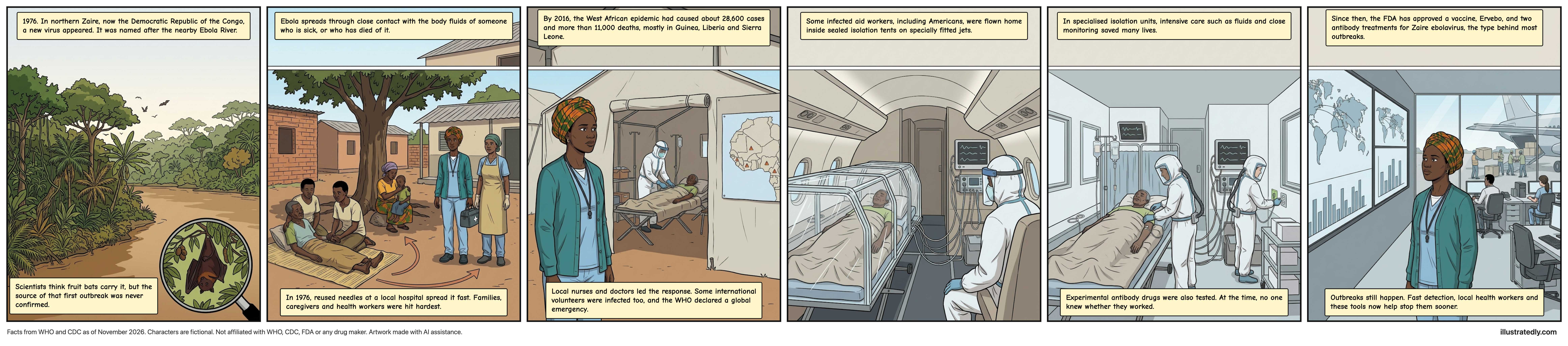
1976. In northern Zaire, now the Democratic Republic of the Congo, a new virus appeared. It was named after the nearby Ebola River.
Scientists think fruit bats carry it, but the source of that first outbreak was never confirmed.
2. The spread
Ebola spreads through close contact with the body fluids of someone who is sick, or who has died of it.
In 1976, reused needles at a local hospital spread it fast. Families, caregivers and health workers were hit hardest.
3. A global emergency
By 2016, the West African epidemic had caused about 28,600 cases and more than 11,000 deaths, mostly in Guinea, Liberia and Sierra Leone.
Local nurses and doctors led the response. Some international volunteers were infected too, and the WHO declared a global emergency.
4. Evacuation
Some infected aid workers, including Americans, were flown home inside sealed isolation tents on specially fitted jets.
5. Treatment
In specialised isolation units, intensive care such as fluids and close monitoring saved many lives.
Experimental antibody drugs were also tested. At the time, no one knew whether they worked.
6. Today
Since then, the FDA has approved a vaccine, Ervebo, and two antibody treatments for Zaire ebolavirus, the type behind most outbreaks.
Outbreaks still happen. Fast detection, local health workers and these tools now help stop them sooner.